Discover why cinema ads still deliver unmatched attention and how to plan across key markets. This guide explains the planning choices that matter before you shortlist locations, approve creative or confirm campaign dates.
Why the cinema environment is different
Cinema audiences are seated, the screen is dominant and competing distractions are limited. That gives brands room for emotion, demonstration and sound-led storytelling that roadside media cannot provide.
The format can also be planned by theatre, city, language and film profile, allowing a campaign to align closely with the intended audience.
Select the placement within the cinema journey
The screen is only one option. The strongest plan depends on whether you need deep attention or repeated presence around the venue.
- On-screen spots for immersive storytelling and product launches.
- Cinema slides for simple offers and local calls to action.
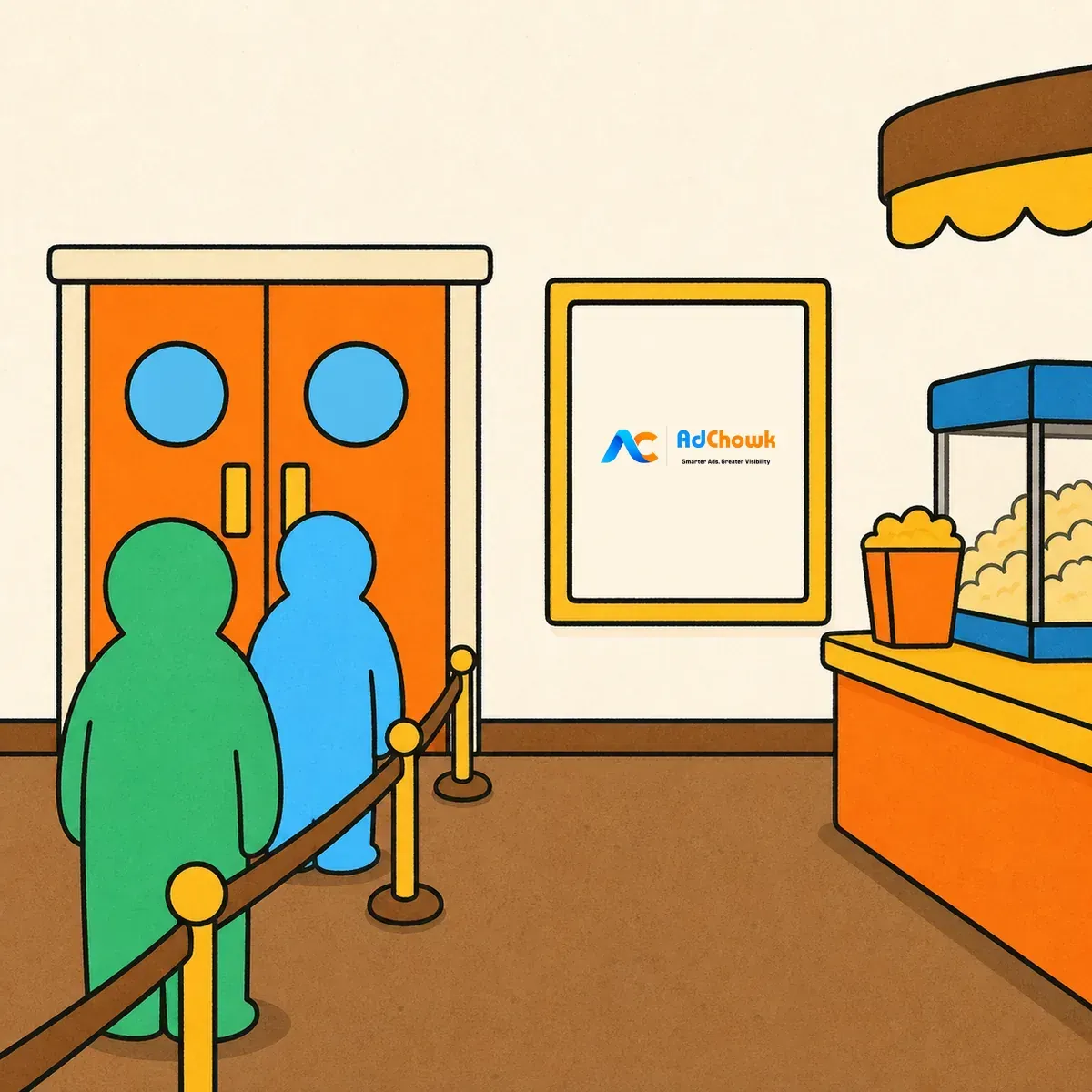
- Lobby screens and standees for repetition before and after the show.
- Frontage branding when the venue itself sits in a valuable catchment.
Plan delivery and verification early
Confirm creative duration, aspect ratio, audio requirements and submission deadlines before production is final. Regional versions should be labelled clearly by theatre or market.
Ask for screening logs or available proof, and combine them with on-site photographs of lobby or frontage media for a complete execution record.
Cinema is an attention format: use sight, sound and a memorable closing message instead of treating it like a static outdoor board.
AdChowk planning note