Choosing outdoor advertising for a school is a decision about parents, routes and timing more than it is about hoardings. This is the main page for schools on AdChowk: it connects the formats, the admission calendar, the rules on what may be printed and the way a campaign is planned and proved. Detailed guides on claims, creative, checklists and city plans are linked at the end, and every rule or date that is not confirmed is labelled as reported or as a planning judgment.
Who this page is for and what outdoor advertising can honestly do for a school
This page is for the principal, admission head, trustee or marketing head of a school who is deciding whether outdoor advertising belongs in the admission plan. It explains which outdoor formats exist, when they matter in the Telangana and Andhra Pradesh admission year, what a school may safely say on a board and how a campaign can be structured without guessing. Where a rule is known only from news reports it is flagged as reported, and nothing here is legal advice.
A school is an unusual advertiser because the buyer is a parent and the decision is about a child, which makes the choice slow, emotional and heavily shaped by what other parents say. Outdoor advertising rarely makes that decision on its own. What it can do is make the school’s name familiar in the colonies that matter, so that a parent who starts comparing schools already recognises the name.
The outdoor formats a school can use and the job each one does
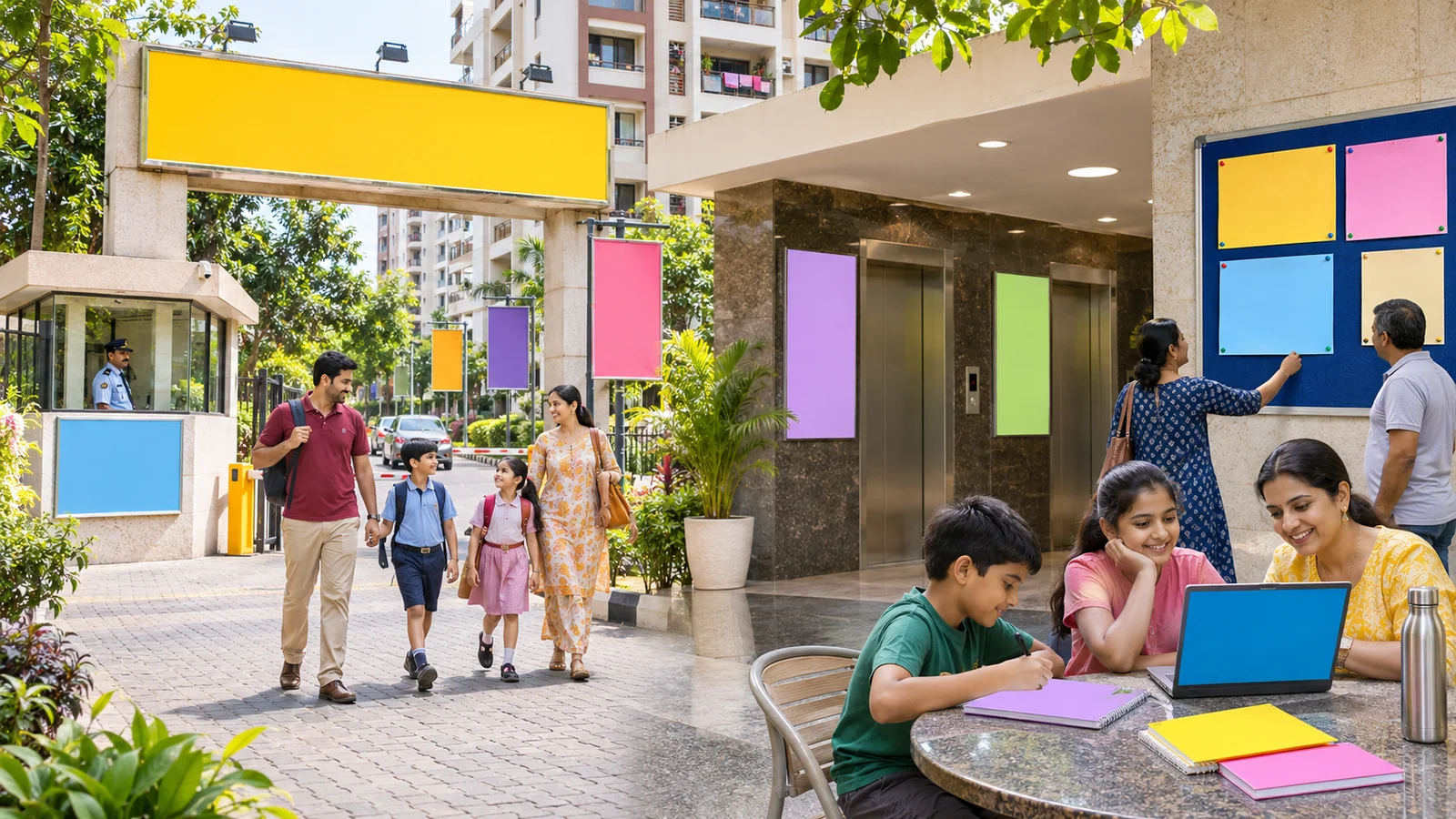
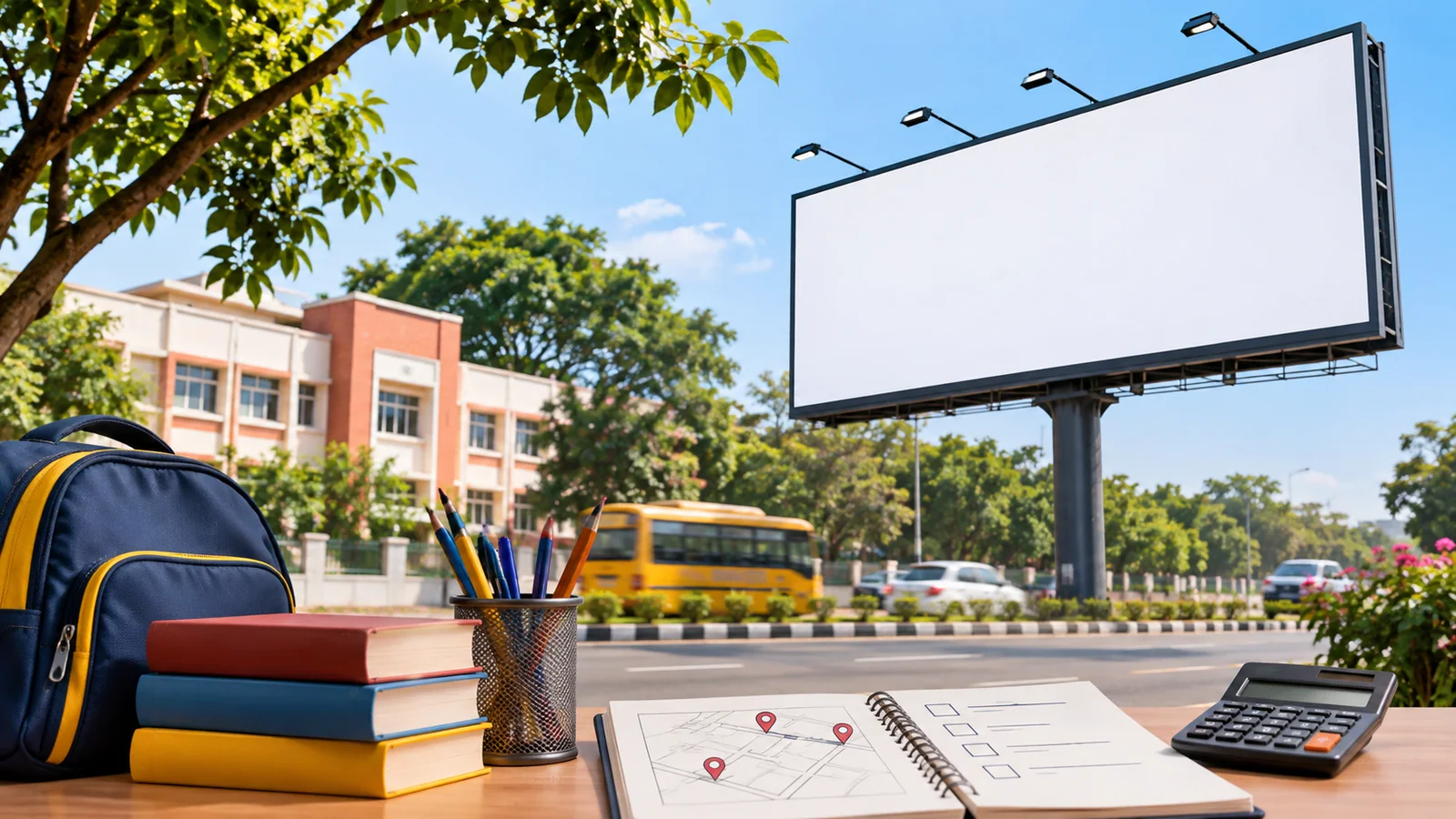
AdChowk lists several outdoor formats that suit schools, and the useful way to read the list is by the job each format does rather than by its size. Pole boards, no-parking boards, auto-tops, hoardings, bus shelters and apartment lift screens all reach parents in different moments of their day. A plan that gives every format a clear job is easier to measure and easier to defend to a trustee than one that simply buys visibility.
Pole boards stand on the roads parents already use and suit a school that wants a steady reminder along a drop-off or commuting route. Because a pole board sits at eye level for pedestrians and slow traffic, it can carry a short message and a locality cue such as the name of the colony. They work best in clusters along one route so that a parent passes the same name several times in a week.
When a school should advertise: the admission calendar for Telangana and Andhra Pradesh
Admission advertising for schools is about timing as much as format, because a message that appears before parents are ready or before the rules allow it can do more harm than good. Today is November 2026, which in the Telangana and Andhra Pradesh admission year is still the preparation phase rather than the peak. The heavy outdoor windows for the 2027–28 intake are likely to fall between February and the June reopening, which is a planning judgment based on how the previous cycle ran and not a published rule.
The months before that window are best spent on work that does not depend on the official calendar, such as shortlisting sites, asking for holds, collecting documents and clearing creative. Good locations near campuses and along parent routes tend to be taken early, so a school that waits for the peak may find the best sites gone. Booking is not the same as printing, so a school can reserve its options while it waits to confirm the rules.
What a school may and may not put on a board
A printed hoarding repeats the school’s claims for months in public, so what a school may say matters as much as where it appears. AdChowk is an intermediary and not the advertiser, but the claims on the board are the school’s own and the school carries the responsibility for them. This section summarises the rules AdChowk’s research found, with the strength of the evidence stated, and it is general information and not legal advice.
The Advertising Standards Council of India published guidelines for educational institutions, programmes and platforms on 9 March 2023, and they cover universities, colleges, schools, coaching classes and edtech. Those guidelines were read in full for AdChowk’s research, which makes them the best-supported part of this section. Check the current text on the council’s website before you rely on any detail here.
A sample campaign structure for a school, illustrative and without prices or results
The structures below are illustrative planning examples, not recommendations for your school and not records of campaigns AdChowk has run. They contain no prices, reach figures or results, because none have been fixed or measured. Their purpose is to show how formats, timing and measurement fit together so that a school can ask better questions.
Consider a single-campus school whose families come from a handful of nearby colonies and which wants to fill the entry classes for the next year. The plan could start with a few pole boards or no-parking boards along the two or three roads that most families use, giving the name repeated exposure. It could add one hoarding at the busiest junction on the approach to the campus if permission allows.
How AdChowk works for a school and what to prepare before you ask for a plan
AdChowk works in four steps that a school can follow without any media-buying experience: a brief, a recommendation, a placement and a photograph of what went up. In the brief you state your admission goal and a budget you are comfortable with. The platform then plans a mix of formats and localities and shows the reasoning behind it, so you can see why each recommendation was made.
The recommendation is a plan to be discussed and adjusted, not a guarantee of any outcome. A school can ask to see how the mix changes if the budget changes, if one locality is removed or if a format is not permitted near the campus. Media owners list their sites on AdChowk and keep their own rates, which is why price questions are answered in a quote rather than on this page.
Questions school leaders ask about outdoor advertising
How much should a school spend on outdoor advertising? There is no honest single answer, because the right amount depends on the size of the catchment, the seats to fill and how long the window is. This page does not publish prices, and any source that gives a fixed percentage of fees should be asked for its evidence.
Can a school print toppers or results on a board? Results can be shown only if the school can prove them, which means naming the exam or board, the year and the number of students who sat it. Student names and photographs raise consent questions, so get written permission before using them and check the current guidelines.